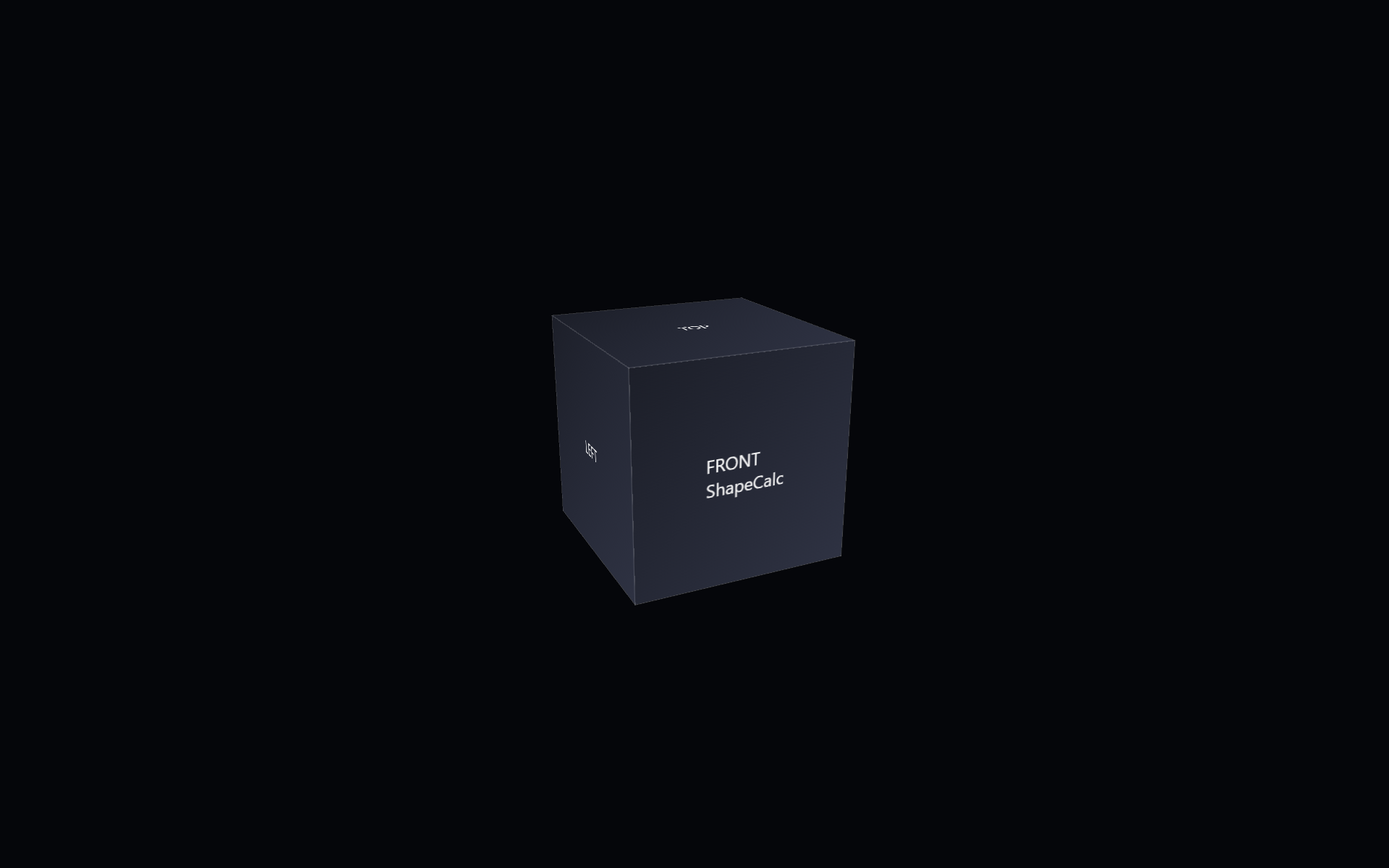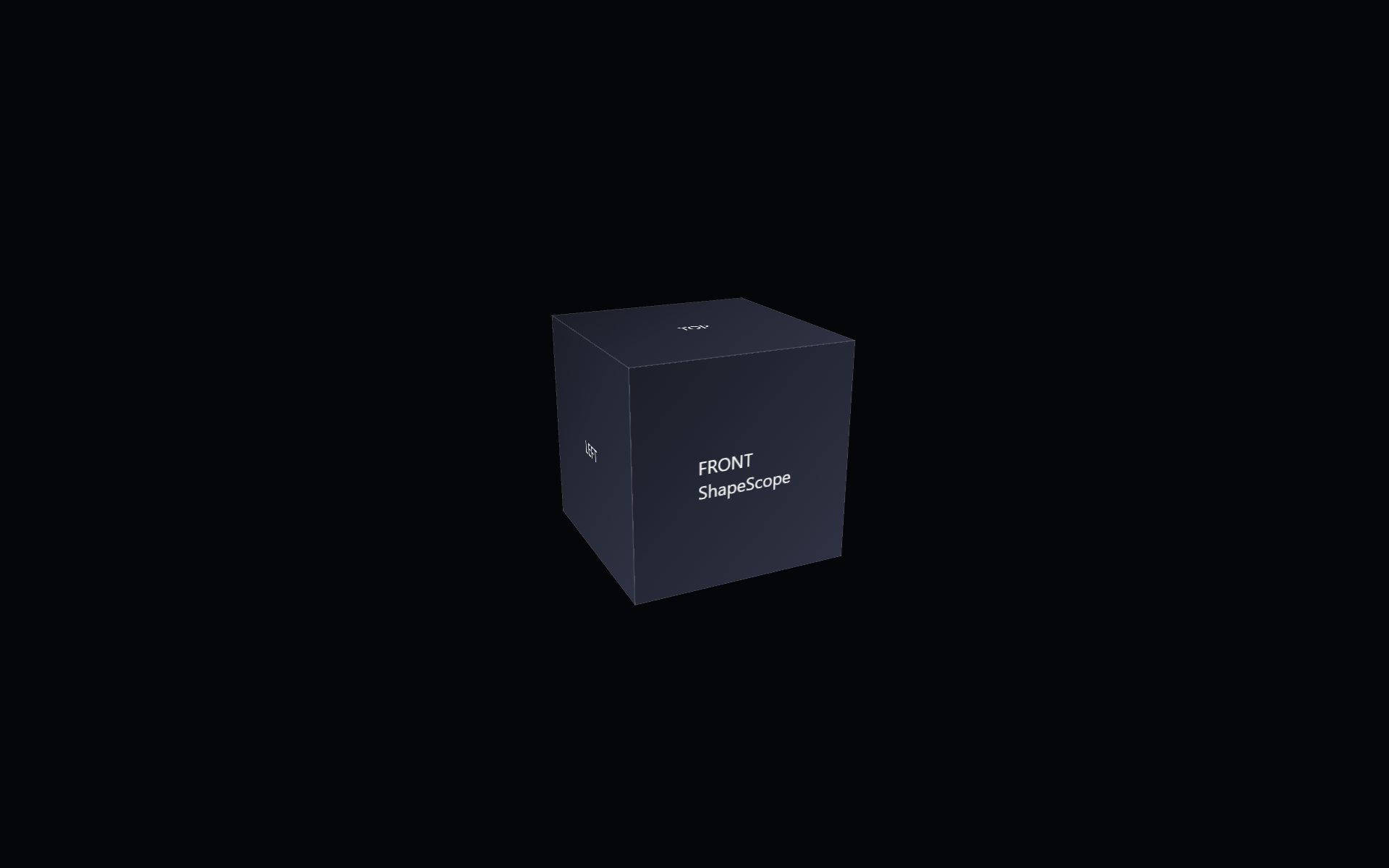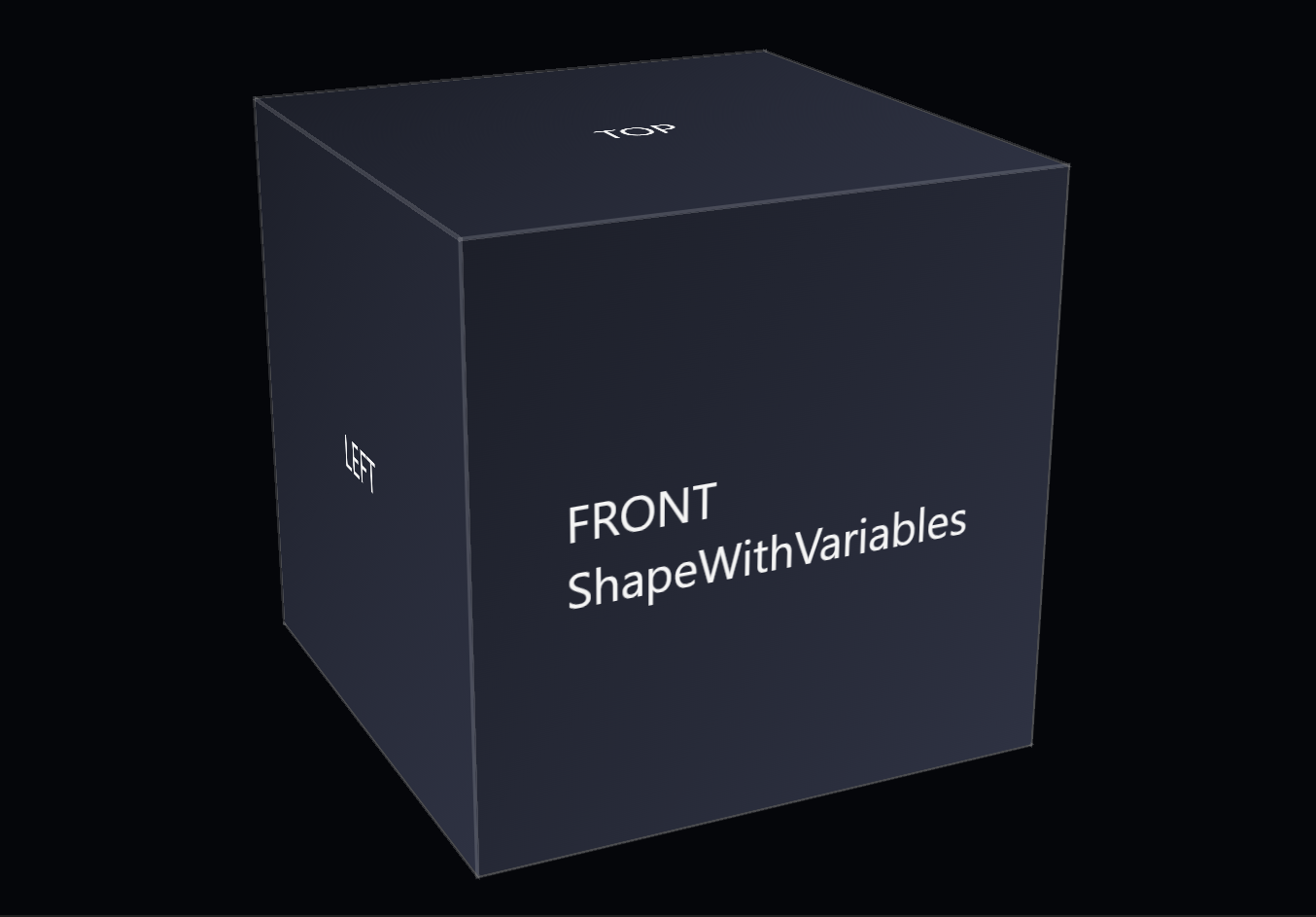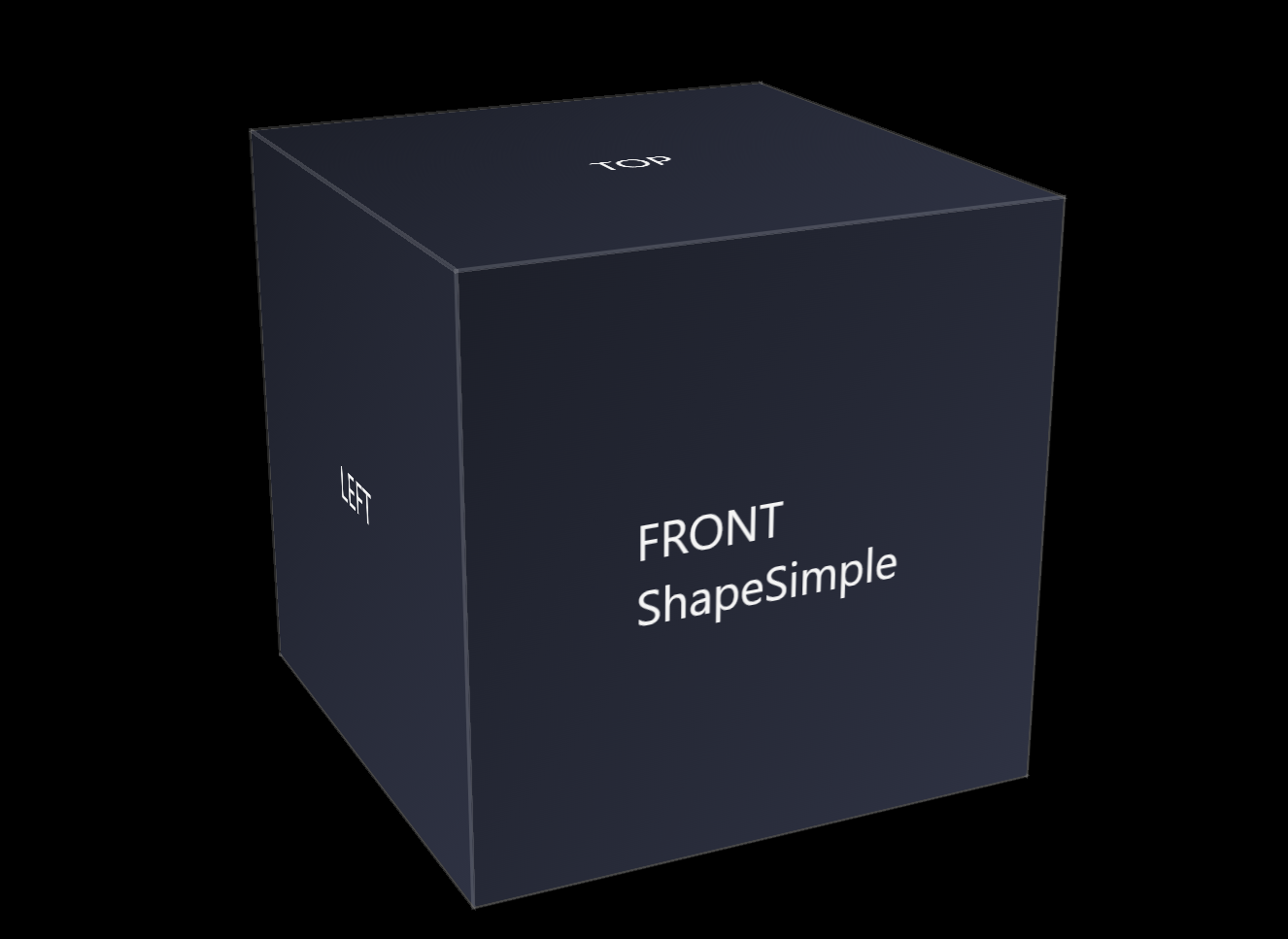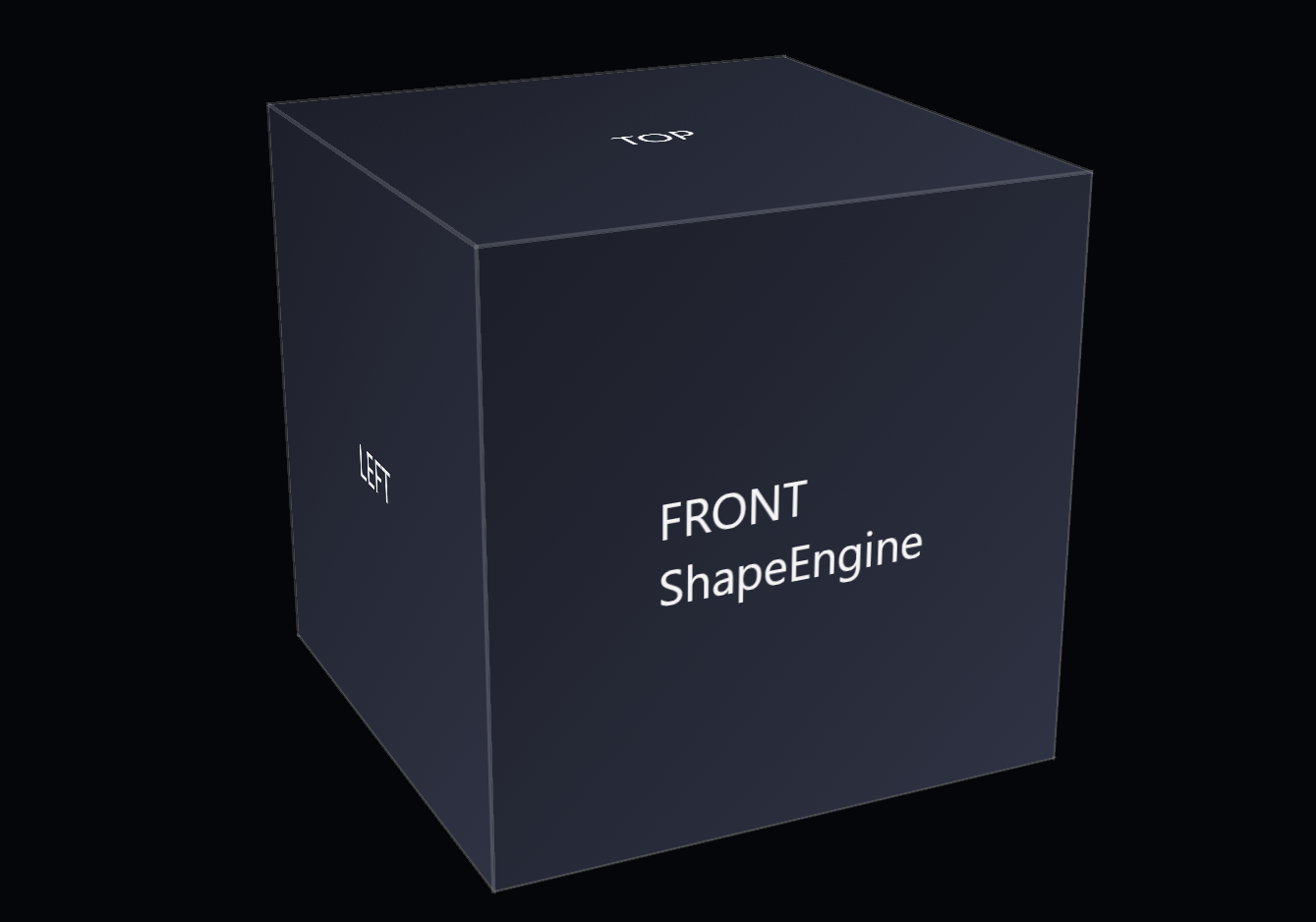
ShapeEngine is the third step in the pack and the point where the shape gains internal structure. It builds on ShapeWithVariables by using the CSS custom properties defined there to replace the hard‑coded values in the 3d transform.

The code below shows the base HTML for the shape.
<div class="scene">
        <div class="shape">
                <div class="shape__face shape__face--front">FRONT<br />ShapeEngine</div>
                <div class="shape__face shape__face--left">LEFT</div>
                <div class="shape__face shape__face--back">BACK</div>
                <div class="shape__face shape__face--right">RIGHT</div>
                <div class="shape__face shape__face--top">TOP</div>
                <div class="shape__face shape__face--bottom">BOTTOM</div>
        </div>
</div>
The code below shows the current CSS for the shape.
:root
{
        --shape-size: 200px;
        --shape-depth: 200px;
        --panel-count: 6;
        --panel-gap: 0px;

        --rotate-x: -20deg;
        --rotate-y: 25deg;
        --rotate-z: 0deg;

        --perspective: 800px;
        --perspective-origin-x: 50%;
        --perspective-origin-y: 50%;

        --face-front-rotate: 0deg;
        --face-left-rotate: -90deg;
        --face-back-rotate: 180deg;
        --face-right-rotate: 90deg;
        --face-top-rotate: 90deg;
        --face-bottom-rotate: -90deg;
}

body
{
        margin: 0;
        min-height: 100vh;
        display: flex;
        align-items: center;
        justify-content: center;
        background: #05060a;
        color: #f5f5f5;
        font-family: system-ui, -apple-system, BlinkMacSystemFont, "SF Pro Text", "Segoe UI", sans-serif;
}

.scene
{
        width: 200px;
        height: 200px;
        perspective: 800px;
        perspective-origin: 50% 50%;
}

.shape
{
        position: relative;
        width: 100%;
        height: 100%;
        transform-style: preserve-3d;
        transform: rotateX(-20deg) rotateY(25deg) rotateZ(0deg);
}

.shape__face
{
        position: absolute;
        width: 100%;
        height: 100%;
        display: flex;
        align-items: center;
        justify-content: center;
        background: linear-gradient(135deg, #1b1f2a, #2c3244);
        outline: 1px solid rgba(255, 255, 255, 0.15);
        box-sizing: border-box;
}

.shape__face--front { transform: rotateY(var(--face-front-rotate)) translateZ(calc(var(--shape-depth) / 2)); }
.shape__face--left { transform: rotateY(var(--face-left-rotate)) translateZ(calc(var(--shape-depth) / 2)); }
.shape__face--back { transform: rotateY(var(--face-back-rotate)) translateZ(calc(var(--shape-depth) / 2)); }
.shape__face--right { transform: rotateY(var(--face-right-rotate)) translateZ(calc(var(--shape-depth) / 2)); }
.shape__face--top { transform: rotateX(var(--face-top-rotate)) translateZ(calc(var(--shape-depth) / 2)); }
.shape__face--bottom { transform: rotateX(var(--face-bottom-rotate)) translateZ(calc(var(--shape-depth) / 2)); }
The goal of this step is to complete the foundation of an extensible CSS shape.
The folder includes:
- an updated HTML file with the simple shape
- a CSS file that replaces the hard‑coded values in the transforms with CSS custom properties
- a short note describing what changed from ShapeWithVariables
What changed from the previous step.
- Change: Completed the move from fixed transform values to fully variable‑driven transforms.
- Reason: Make the shape fully adjustable through custom properties while keeping the component simple and readable.
This step completes the core of the shape engine. Building on ShapeWithVariables, it implements the custom properties introduced there, bringing key transform values under custom‑property control and giving the component flexibility without adding complexity. With this foundation in place, Shape Pack 1 reaches its intended baseline, and the next progression begins in Shape Pack 2.